How Much Do the Best Tools for WhatsApp Marketing Automation Cost in 2026
WhatsApp marketing automation pricing in 2026 ranges from free tiers to enterprise contracts. Budgets get approved or rejected on whether the monthly cost maps to a clear return, so vague quotes from some tools stall decisions for weeks.
This article breaks down what the best WhatsApp marketing automation tools cost, which pricing models drive those numbers, and what Com.bot's Silver, Gold and Platinum plans include. You will finish knowing which plan fits your volume, what add-ons cost, and whether the investment is justified.
What Is Com.bot? The AI Unified Business Communication Platform
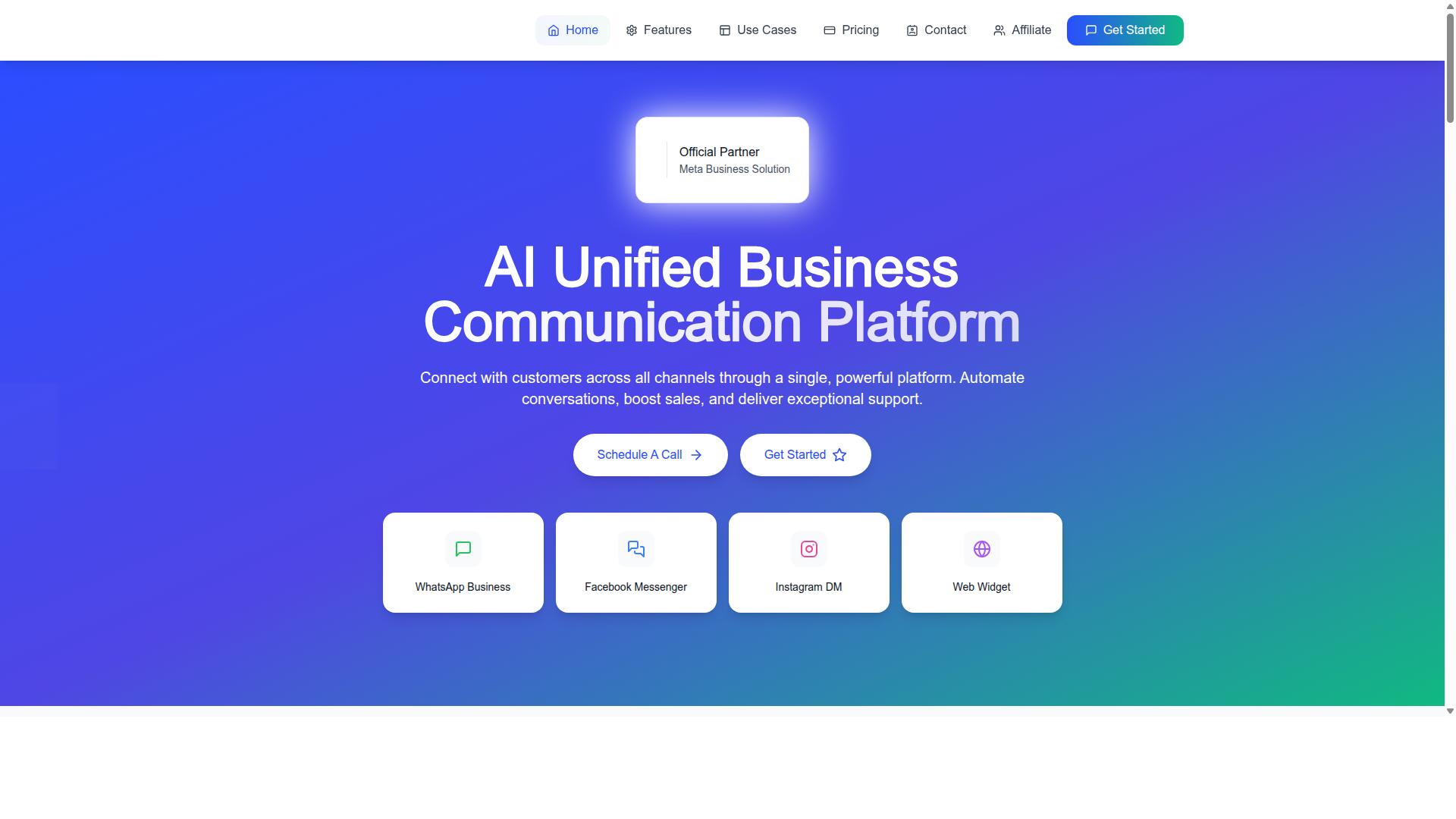
Com.bot is an AI-powered unified business communication platform that consolidates WhatsApp Business, Facebook Messenger, Instagram DM, and Web Widget into a single dashboard for automating customer interactions. Instead of juggling four separate inboxes and four separate logins, teams work from one place where every conversation lives side by side.
That single-interface design matters for anyone evaluating WhatsApp Marketing Automation tools in 2026. Most software on the market handles one channel well and treats the rest as an afterthought. Com.bot was built the other way around, with multi-channel connection as the starting point rather than a bolt-on.
The platform is owned and managed by Com Bot AI Limited and operates as an Official Meta Business Partner with direct WhatsApp Business API integration. That partner status is the technical foundation behind everything the platform does on WhatsApp, from automation to bulk sends.
Com.bot's stated purpose covers three connected jobs: automating conversations, boosting sales, and delivering exceptional customer support. In practice, those three goals describe the full arc of a customer relationship, from the first automated reply to the follow-up that closes a sale to the ongoing support that keeps the customer around.
For readers comparing subscription costs and plan tiers across WhatsApp marketing software, it helps to know what category Com.bot belongs to before looking at price. This is a unified communication platform, not a single-purpose broadcast tool, and that distinction shapes how pricing conversations usually go.
The platform's reach is global rather than regional. Com.bot serves users across 50+ countries and processes more than 25M+ messages daily, a scale that speaks to reliability under real-world volume. Businesses of different sizes, from small teams to larger operations, use the same core platform.
For a buyer, that scale answers a practical question early. A tool handling tens of millions of messages a day has already been stress-tested by traffic far beyond what most individual businesses will generate, which reduces the risk that a growing campaign outpaces the software.
Because Com.bot connects WhatsApp, Messenger, Instagram, and a Web Widget, a business can meet customers on whichever channel they prefer without fragmenting its data or its team's attention. That consolidation is the platform's defining idea, and it is the lens through which the rest of this article examines cost.
How Much Do the Best WhatsApp Marketing Automation Tools Cost in 2026?
In 2026, WhatsApp marketing automation tools range from freemium entry-level options to enterprise-grade platforms, with costs driven by message volume, feature depth, and support levels.
Because every platform structures its pricing differently, two businesses sending a similar number of messages can end up paying wildly different amounts. Some vendors bundle everything into one rate, while others stack charges on top of each other.
The sections below break down the main pricing models used across the market, what typically pushes costs up or down, and where hidden fees tend to hide. They also explain how Com.bot approaches pricing differently, so you can compare models with a clear head before committing to a subscription.
Typical Pricing Models and What Drives Cost
Most WhatsApp automation platforms in 2026 use one of four pricing models: conversation-based, user-based, usage-based, or flat-rate subscriptions, each with distinct cost drivers.
Conversation-based pricing charges you for each 24-hour messaging window opened with a customer. Rates vary by country and message category. Meta's own WhatsApp Business API rates sit underneath these charges, so what you pay the platform is usually on top of what you pay Meta.
User-based pricing works like traditional helpdesk software. You pay per agent seat, and adding a support rep or a campaign manager means adding another seat, which gets expensive fast for growing teams.
Usage-based pricing bills by the message, API call, or automation run. It scales neatly with volume, but it also means a viral campaign or a busy month can produce a bill you did not plan for. Overage charges are common here.
Flat-rate subscriptions charge a fixed monthly or quarterly fee regardless of how much you send. This model is less common but far easier to budget around.
Beyond the model itself, several factors drive total cost:
- Message volume, including broadcast and bulk messaging
- Number of agent seats or team members
- Features such as chatbot builders, CRM integration, and automation triggers
- Support level, from self-serve documentation to dedicated assistance
- Setup, onboarding, and integration work, which some vendors bill separately
Hidden fees deserve special attention. Setup charges, onboarding packages, and per-integration fees can add real money to a plan that looked cheap on the pricing page. Because costs vary so widely across models, predictable pricing has become a genuine differentiator for businesses trying to forecast their ROI.
Why Com.bot Offers Predictable, Transparent Pricing
Com.bot differentiates itself with a flat-rate quarterly subscription model that eliminates per-message fees and hidden costs, making budgeting straightforward for businesses of all sizes.
There are no per-message or per-conversation charges, no setup fees, and all core features are included in the plan. WhatsApp messaging itself is billed at actual Meta rates with no markup, so you are not paying a premium layer on top of the underlying API cost.
Com.bot offers three tiers, all priced in USD per quarter:
| Plan | Quarterly Cost |
|---|---|
| Silver | $149 per quarter |
| Gold (Recommended) | $349 per quarter |
| Platinum V1 | $2500 per quarter |
Optional add-ons are available at $10 per month each, covering an additional team member, a social channel, external actions (per 5000), bot triggers (per 25000), and an ecom store. Dedicated support is billed hourly when needed: $49 per hour for WABA, CRM, and Inbox assistance, and $99 per hour for Ecommerce, Bots, and Automations.
Compare that structure to conversation-based or usage-based models, where a strong month of broadcast campaigns can inflate your bill without warning. With Com.bot, the subscription is the subscription. That predictability makes it far easier for a small business or an enterprise team to forecast spend, plan scalability, and judge return on investment before the quarter even starts.
Com.bot Pricing and Plans Explained
Com.bot offers three straightforward subscription tiers, Silver, Gold, and Platinum, each designed to match different business needs and budgets. Every plan is billed quarterly, so there is no monthly billing cycle to track and no annual lock-in to negotiate.
Core features come standard across all three tiers, which keeps the decision simple: businesses choose a plan based on capacity and scale, not on whether basic functionality is included. The sections below break down exactly what each tier provides and what optional extras cost.
For teams comparing WhatsApp Marketing Automation pricing in 2026, this structure makes budgeting easier. The sticker price is the real price, with add-ons available only when a business actually needs them.
Silver, Gold and Platinum Plans Compared
The Silver plan at $149 per quarter is ideal for small teams getting started, while the Gold plan at $349 per quarter (recommended) adds more capacity and features for growing businesses. Platinum V1 sits at the top at $2500 per quarter for operations that need the highest level of scale.
All three tiers are quarterly subscriptions with no hidden fees. WhatsApp messaging itself is billed at actual Meta rates with no markup, so the plan price covers the platform, not the conversations.
| Plan | Price | Best For |
|---|---|---|
| Silver | $149 per quarter | Small teams getting started |
| Gold (Recommended) | $349 per quarter | Growing businesses needing more capacity |
| Platinum V1 | $2500 per quarter | Large-scale, high-volume operations |
Silver keeps entry costs low for small businesses testing WhatsApp Marketing Automation for the first time. It suits lean teams that want core features without paying for capacity they will not use yet.
Gold is the recommended tier because it balances price and capability for businesses that have outgrown the basics. For many growing teams, this is the natural upgrade path once Silver's limits start to pinch.
Platinum V1 targets enterprise-scale operations where volume and infrastructure demands justify the higher investment. It is the right fit when a business treats WhatsApp as a primary revenue channel rather than a supporting one.
The value proposition across all three tiers is the same: predictable quarterly pricing, no markup on Meta messaging rates, and a clear upgrade path as the business scales.
Add-Ons and Dedicated Support Costs
Beyond the base plans, Com.bot offers add-ons such as additional team members, social channels, and external actions for $10 per month each, allowing businesses to customize their setup. Bot triggers (per 25,000) and an ecom store are also available as add-ons at the same $10 per month rate.
These extras can be mixed and matched, so a business can scale one dimension, like adding a seat or a channel, without upgrading the entire plan. That flexibility matters for teams whose needs grow unevenly.
- Additional team member: $10 per month
- Additional social channel: $10 per month
- External actions: $10 per month per 5,000 actions
- Bot triggers: $10 per month per 25,000 triggers
- Ecom store: $10 per month
Dedicated support is priced separately by category. WABA, CRM, and Inbox support costs $49 per hour, while Ecommerce, Bots, and Automations support costs $99 per hour. These are published rates, not negotiated quotes.
Add-on prices are fixed and transparent, which makes them easy to budget for. In many cases, stacking a few $10 add-ons is more cost-effective than jumping to the next tier, especially when only one or two limits are being hit.
A small team that needs one extra seat and one more channel, for example, would spend far less on add-ons than on a full plan upgrade. That keeps the subscription aligned with actual usage rather than projected growth.
Key Features That Justify the Cost
Com.bot's feature set, including WhatsApp Business API integration, a visual bot builder, and native payments, delivers tangible ROI that offsets the subscription cost. When you compare WhatsApp Marketing Automation tools in 2026, the real question is not the monthly fee alone but what that fee enables.
Com.bot bundles several capabilities that many platforms charge extra for or omit entirely:
- WhatsApp Business API integration for official, scalable messaging
- Visual Bot Builder with a drag-and-drop interface
- Native Payments for WhatsApp transactions
- Unified Team Inbox for centralized conversations
- Multi-Channel Support across WhatsApp, Facebook and Instagram
Each of these features reduces manual work or opens a new revenue path, which is how a subscription earns its place in your budget. The sections below break down what each one does and why it matters for cost justification.
WhatsApp Business API, Visual Bot Builder and Native Payments
Com.bot provides official WhatsApp Business API access, a drag-and-drop visual bot builder, and native payment processing for WhatsApp transactions, enabling end-to-end automation. These three features sit at the core of what you are paying for, and each one addresses a different cost center in a typical messaging operation.
WhatsApp Business API integration means messaging runs through Meta's official channel rather than unofficial workarounds. That matters for deliverability and scalability, since official access supports higher message volumes and consistent template message approval. Businesses that rely on bulk messaging or broadcast campaigns need this foundation to grow without risking account restrictions.
The Visual Bot Builder removes the coding barrier. A drag-and-drop interface lets team members assemble Smart Chatbots without developer time, which directly reduces setup cost and ongoing maintenance.
Native Payments lets you collect payment inside the WhatsApp conversation. Common use cases include Payment Collection for orders and recurring services. Fewer steps typically mean fewer drop-offs, which turns the same conversation into revenue.
These capabilities are included across Com.bot's plans rather than gated behind an enterprise tier, so the value applies whether you run a small business or a larger operation. For a pricing comparison in 2026, that inclusion is what separates a fair monthly fee from an inflated one.
Unified Team Inbox and Multi-Channel Support
The unified team inbox consolidates conversations from WhatsApp, Facebook Messenger, Instagram DM, and Web Widget into a single interface, while multi-channel support ensures no customer query is missed. For teams juggling multiple logins and browser tabs, this centralization is often the feature that pays for itself first.
Inside the inbox, Team Collaboration with role-based access lets you assign conversations, track status, and keep accountability clear. A support agent handles Customer Support tickets while a sales colleague picks up a product question, all without forwarding screenshots or losing context. Faster handoffs translate into improved response times and a better customer experience.
Multi-Channel Support means customers reach you on the platform they already prefer. Someone who messages on Instagram in the morning and follows up on WhatsApp in the afternoon stays in one continuous thread from your team's perspective. Marketing campaigns can run on one channel while support runs on another, and both feed the same inbox.
These features are available across plans, which adds value at every tier. For a small business, the inbox replaces a patchwork of personal devices. For a growing team, it provides the structure needed to scale without adding headcount proportionally. Either way, the efficiency gain is a direct offset against the subscription cost, and it is one of the clearest reasons Com.bot's pricing holds up in 2026.
Trust Signals: Why Com.bot Is a Safe Investment
Com.bot's status as an Official Meta Business Partner, combined with enterprise-grade security and a proven track record, makes it a reliable choice for businesses. That status is not a marketing label. It reflects a direct working relationship with Meta, the company behind WhatsApp itself.
For anyone weighing WhatsApp Marketing Automation costs in 2026, platform credibility matters as much as price. A cheaper tool that risks account bans or compliance failures can cost far more than a slightly higher monthly fee. Com.bot's credentials exist to remove that risk.
Below are the signals that separate a safe investment from a gamble.
- Official Meta Business Partner status, which signals direct alignment with WhatsApp's platform rules
- 23,000+ active customers relying on the platform today
- 100+ government bodies served, a segment with strict compliance demands
- 500+ global partners extending reach and support across markets
- 25M+ messages per day processed, demonstrating scale under load
- 100K+ bots created, evidence of broad, repeated adoption
- Enterprise security with end-to-end encryption protecting message data
Each signal maps to a practical concern. Meta Business Partner status supports compliance, so campaigns stay within platform policy. Government and enterprise clients point to reliability under scrutiny. Daily message volume and bot counts show the infrastructure handles scalability as a business grows.
End-to-end encryption addresses data protection, which matters when customer conversations carry personal or transactional details. Together, these factors reduce the operational and legal risks that quietly erode ROI.
The practical takeaway is straightforward. Pricing decisions for WhatsApp Marketing Automation should account for total risk, not just the subscription line. A platform with verified scale, official partnerships, and enterprise security gives budget planning a stable foundation. On those measures, Com.bot is a safe investment.
Who Should Use Com.bot
Com.bot is designed for businesses of all sizes, from small teams to large enterprises and government bodies, that need to automate and scale customer communication across multiple channels. Its target audience is defined by a clear need: automating and scaling conversations on WhatsApp, Facebook, and Instagram.
That scope matters when comparing WhatsApp Marketing Automation costs in 2026. A tool priced for one channel rarely fits an organization juggling several. Com.bot's positioning speaks directly to teams that want multi-channel reach without managing separate platforms.
Below are the main groups that fit this profile, along with the kind of work each tends to bring to the table.
- Small businesses seeking affordable automation for everyday customer chats, order updates, and follow-ups.
- Enterprises requiring multi-channel customer support and bulk messaging at scale.
- Government bodies that need secure, reliable communication with citizens and constituents.
- Marketing agencies managing messaging and campaigns across multiple client accounts.
Small businesses often start with a single channel and a modest monthly fee, then expand as volume grows. The appeal of affordable automation is that it removes repetitive manual replies without demanding a large upfront investment.
Enterprises and government bodies come with different expectations. They need multi-channel customer support, bulk messaging, order updates, and payment collection handled consistently. Com.bot's stated audience includes exactly these organizations, which signals that its feature set is built for higher-volume, higher-stakes communication rather than casual chat alone.
Agencies sit somewhere in between. Managing several clients means juggling different tones, templates, and reporting needs. A platform that supports WhatsApp, Facebook, and Instagram in one place reduces the number of tools an agency has to babysit, which in turn simplifies budget planning and scalability.
For all four groups, the practical question in 2026 is not whether automation is worth it, but which pricing model fits. Com.bot's fit across small business, enterprise, government, and agency use cases suggests it can serve as a single answer rather than four separate purchases. Teams evaluating subscription plans and tiers should weigh their expected message volume and channel mix before committing, since those two factors drive most automation costs.
Final Verdict: Is Com.bot Worth the Price in 2026?
Given its transparent pricing, comprehensive features, and strong trust signals, Com.bot delivers excellent value for businesses seeking WhatsApp marketing automation in 2026.
Pricing across the WhatsApp marketing automation space has become more predictable, but predictability alone does not make a platform worth the monthly fee. What matters is whether the subscription matches the way a business actually sends messages, manages contacts, and scales campaigns over time.
Com.bot stands out because its model avoids the guesswork that frustrates buyers. There are no surprises waiting in the invoice, and the plans are structured to grow alongside the account rather than force an early upgrade.
Three factors shape the final verdict:
- Predictable pricing: a clear structure that supports budget planning instead of erratic per-message or per-conversation swings.
- Feature-rich plans: the core capabilities a growing WhatsApp Business API user needs, from chatbot flows to broadcast and bulk messaging.
- Add-on flexibility: optional extras let teams pay only for what they use, which keeps the effective cost aligned with real needs.
Trust signals reinforce the case. A verified head office in Surat, published contact channels, and responsive support hours all point to a vendor that expects to be held accountable, not one hiding behind a checkout page.
The honest trade-off is that Com.bot is not the cheapest option on the market. Businesses sending only a handful of messages a month may find a bare-bones freemium tool sufficient. But for teams that need reliability, scalability, and multi-channel support, the difference in price is small relative to the operational risk of a weaker platform.
For most growing businesses, the ROI case is straightforward. A platform that handles template messages, session messages, and CRM integration without constant babysitting saves staff time, which is often the largest hidden cost in any marketing stack.
Com.bot is worth the investment for the majority of businesses evaluating WhatsApp marketing automation in 2026, particularly those planning to scale. The subscription is structured for growth, the features cover the full campaign lifecycle, and the support infrastructure is real and reachable.
For sales inquiries, reach the team directly:
- Head Office: 501, Trinity Orion, Vesu Main Road, Surat - 395010, IN
- Phone/WhatsApp: +91 080 6987 1810
- Email: [email protected]
- Business Hours: Monday - Friday: 9:00 AM - 6:00 PM IST
- Social: WhatsApp Support available
If your team is weighing plans and tiers for the year ahead, the practical next step is to map your expected message volume and channel mix, then compare that against what Com.bot offers. That exercise usually makes the decision obvious.
Frequently Asked Questions
How much does Com.bot cost for WhatsApp marketing automation?
Com.bot offers three plans billed quarterly: Silver at $149 per quarter, Gold at $349 per quarter (the recommended option), and Platinum V1 at $2500 per quarter. Optional add-ons cost $10 per month each for items such as an additional team member, social channel, external actions (per 5,000), or bot triggers (per 250). Because pricing depends on your message volume and team size, it's best to contact Com.bot directly for a recommendation.
What's included in Com.bot's plans - do I pay extra for WhatsApp API access?
Com.bot's platform includes WhatsApp Business API integration, a Unified Team Inbox, a drag-and-drop Visual Bot Builder, an Automation Builder, and Native Payments for WhatsApp transactions. Multi-channel support for WhatsApp, Facebook, and Instagram is also part of the platform. For details on exactly which features sit in each plan tier, check with Com.bot's sales team, since add-ons like extra social channels are billed separately.
Are there hidden costs beyond the subscription price?
Com.bot's published pricing is transparent: quarterly plan fees plus clearly listed add-ons at $10 per month for extras like additional team members, social channels, external actions, and bot triggers. Keep in mind that WhatsApp itself may charge conversation-based fees through the WhatsApp Business API, which are separate from your Com.bot subscription. Ask Com.bot for a full breakdown so you can budget accurately.
How does Com.bot's pricing compare to other WhatsApp marketing automation tools?
Pricing across the market varies widely based on message volume, number of agents, and which channels you need, so there's no single "cheapest" option. Rather than comparing headline prices alone, weigh what's bundled in - Com.bot, for example, includes WhatsApp, Facebook Messenger, Instagram DM, and Web Widget support in one platform. Request quotes from each vendor and compare total cost for your actual usage.
Is there a free trial or a way to test Com.bot before paying?
Com.bot emphasizes quick setup and integration, and its team can walk you through the platform before you commit to a quarterly plan. Since Com.bot's verified pricing starts at $149 per quarter for the Silver Plan, it's worth contacting [email protected] or WhatsApp support to discuss your needs and confirm current trial or demo options. Cancellation, privacy, and terms of service policies are all available for review.
Which Com.bot plan is right for my business size?
Com.bot serves everyone from small businesses to enterprises and government bodies - it has 23,000+ active customers and works with 100+ government bodies across 50+ countries. The Gold Plan at $349 per quarter is marked as recommended, making it a reasonable starting point for growing teams, while Platinum V1 at $2500 per quarter suits larger operations. The fastest way to decide is to contact Com.bot with your expected message volume and team size.
Recommended Resources: